
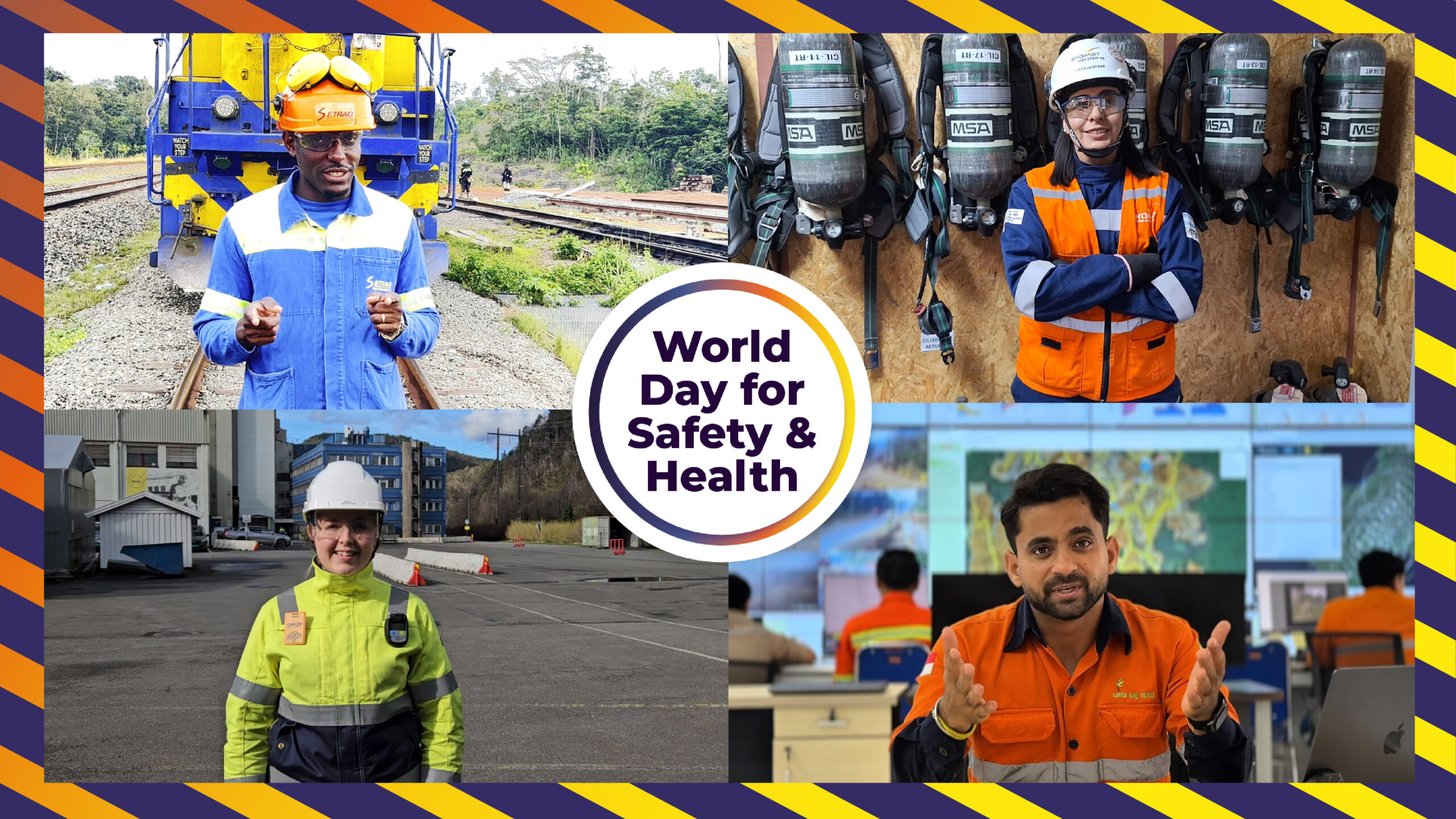
On the occasion of the World Day for Safety and Health at Work, employees across the Group in our 16 countries of operation are coming together to reflect on our practices, learn, commit, and move safety and health forward at Eramet.
By choosing leadership as the theme of this day, Eramet is sending a clear message: safety is everyone’s responsibility, and everyone has the power to act.
Being a safety leader: a shared responsibility
Safety leadership is not limited to managers or experts, and it does not depend on a title or a role. It is a mindset, a way of acting on a daily basis, whatever the job or work environment.
Being a safety leader means:
- intervening when a situation seems dangerous
- asking a question, even outside one’s usual scope
- encouraging safe behavior
- reminding a rule with kindness
- having the courage to say stop
A strategic challenge for sustainable performance
The choice of safety leadership comes in a demanding context for the Group. While Eramet achieved in 2025 a total recordable injury frequency rate (TF2) of 0.8, placing the Group among the benchmarks in the mining and metallurgical sector, the year was also marked by several serious accidents, including four fatalities between 2025 and early 2026. A stark reminder that statistical performance, however high, is inseparable from everyday vigilance.
To sustainably improve results, two major levers are being deployed:
- Strengthening safety leadership, to give meaning to the rules and encourage consistent and visible behaviors. To this end, a broad coaching program for team supervisors is being rolled out across all sites. They play a key role in developing the safety culture among operational teams.
- Strengthening the Eramet Production System (EPS), the Group’s production system designed to improve operational productivity, with safety placed at the heart of all operational standards.
These two dynamics are inseparable: technology alone is not enough without human commitment, and human commitment must be supported by robust systems.
The objective is clear: zero injuries, zero serious accidents, zero compromise.