
Process Innovation is about pushing the boundaries of what our industrial processes can achieve — producing smarter, cleaner, and more efficient operations. By making better use of resources and optimizing every step of production, we strengthen both our performance and our sustainability.
We are exploring many avenues, from improving raw material use to introducing intelligent automation, deploying real‑time measurement, and capturing and reusing energy. These are just examples of the continuous innovation that helps Eramet operate with greater efficiency and lower environmental impact.
Raw Material Improvement
In metallurgical operations, the handling and monitoring of raw materials play a vital role in ensuring product quality, operational efficiency, and worker safety.
In our manganese alloys production, our goal is to enhance the quality and assessment of raw materials throughout their lifecycle—from initial preparation to furnace entry, and their management within the furnace itself.
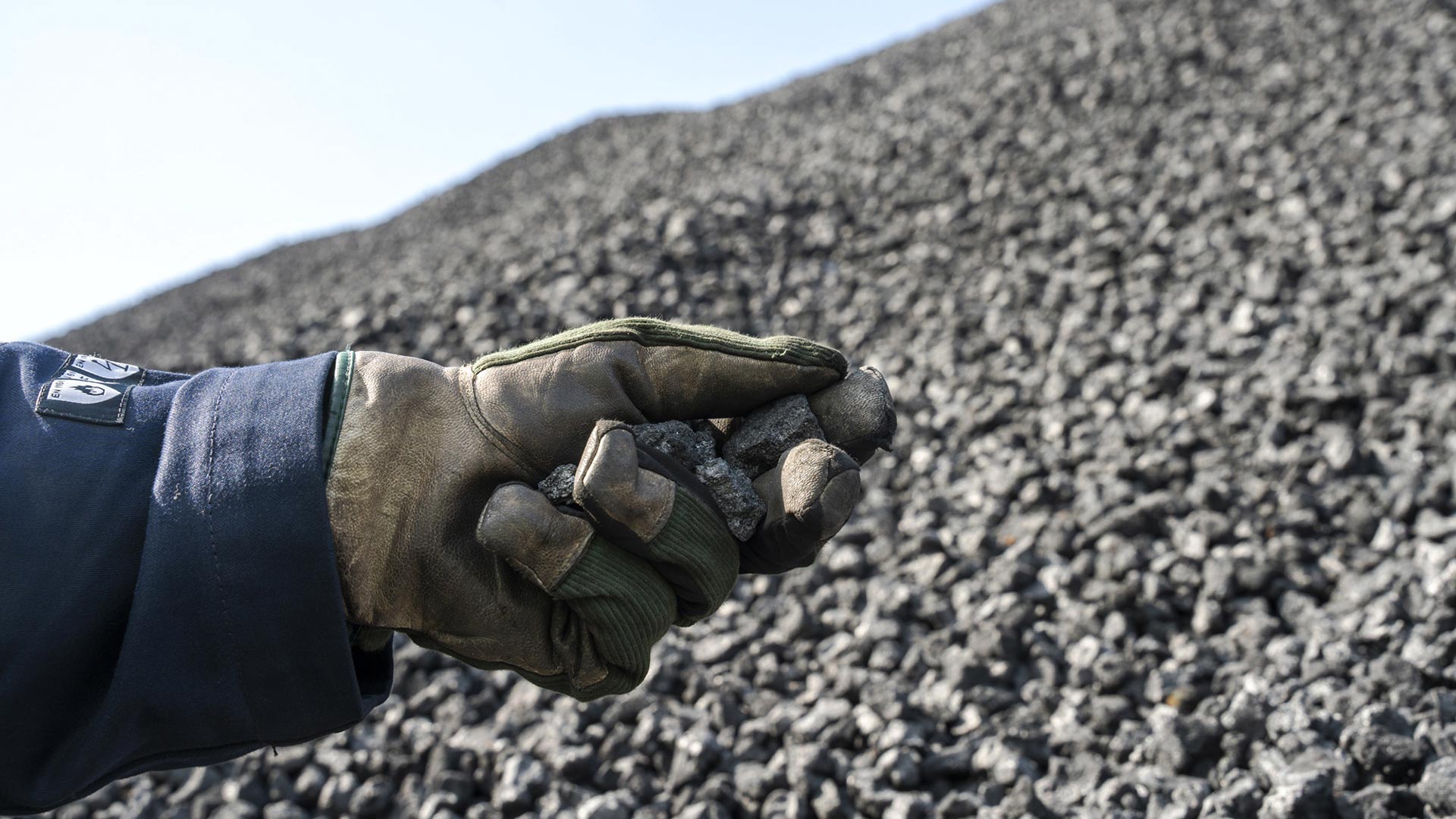
In high-temperature industrial processes like manganese alloy production, the quality of raw materials that enter the furnace significantly impacts energy efficiency, process stability, and product quality. For example: Moisture and fines in raw materials increase energy consumption during smelting, while poorly prepared materials can cause bridging, irregular gas flow, and operational disruptions. It is equally important to have a consistent and clean feed to ensure high-quality alloys and effective slag control.
We currently use several methods to improve raw material preparation such as drying to reduce moisture content and screening to remove fines.
Key Interest Areas
We are looking for novel ideas that:
- Limit fines entering the furnace through innovative screening, agglomeration, or material handling processes.
- Enhance drying efficiency using novel technologies or process integration.
- Improve feed consistency to stabilize furnace operation.
- Enable real-time monitoring of feed quality and composition.
Solutions not of Interest
- Solutions such as basic stockpile management, open air drying, ultrafine grinding and advanced pelletizing.
- Solutions that are purely theoretical and have not yet been validated at small scale or demonstrated in any adjacent application. Solution must be at TRL 6 or above for mining use cases.
Note: Please include a non-confidential explanation of your solution when submitting.
Automation in charging and stocking the furnace
Charging & stocking the furnace involves the process of introducing raw materials into the furnaces. In today’s context, gravity-based charging is common, but it can be inefficient and inconsistent. Furthermore, fines can block gravity-based charging systems. In closed furnaces, fines tend to accumulate and restrict gas flow, leading to poor combustion and uneven heating. In open furnaces, fines can settle and require manual (or remote) poking to redistribute the charge, which is labor-intensive and unsafe.
Key Interest Areas
We are looking for ideas that:
- Automate furnace chargingusing robotics, conveyors, or smart feeders.
- Enable autonomous stockingof raw materials with minimal human intervention.
- Improve the flow of materials in the burden through intelligent charge movement systems.
- Adapt to both open and closed furnace configurations.
- Integrate sensors and control systems for real-time feedback and adjustment;
Solutions not of Interest
- Solutions that involve manual or remote-controlled stocking machines.
- Solutions below TRL 7-8.
Note: Please include a non-confidential explanation of your solution when submitting.
Inline Measurements & Sampling
Sampling and real-time measurements for both input-raw materials and outputs of furnace operations such as slag, metal characteristics during tapping etc. are essential for customizing process parameters and ensuring optimal performance.
Understanding the characterization of each material before charging is critical for maintaining mass balance and achieving consistent product quality.
Manual methods for sampling are still widely used but require good frequency and consistency to be effective. In contrast, real-time data enables immediate adjustments to furnace parameters and allows for early detection of deviations preventing material loss and energy waste.
Key Interest Areas
We are looking to
- Measure key parameters, including but not limited to:
- Temperature
- Pressure
- Flow rate / velocity
- Gas composition (O₂, CO, CO₂, CH₄, H₂, etc.)
- Moisture / humidity
- Particle size distribution
- Density or viscosity
- Optical properties (NIR, IR, UV-Vis, laser scattering)
- Chemical composition (via spectroscopy, LIBS, XRF, etc.)
- Smart Analytics: AI and data platforms interpret sensor data for predictive control.
- Advance inline measurement technologies for harsh industrial environments.
- Automate sampling with minimal disruption to furnace operations.
- Integrate sensors with control systems for real-time decision-making.
- Use AI and analytics to predict and prevent process deviations.
- Improve data reliability and accessibility for operators and engineers.
Solutions not of Interest
- Solutions that are purely theoretical and have not yet been validated at small scale or demonstrated in any adjacent application. Solutions with a TRL below 7 or 8 are not of interest.
- Solutions below TRL 7-8 are not of interest.
Note: Please include a non-confidential explanation of your solution when submitting.
Energy Recovery and Reuse
Slags and metal are tapped from the furnace at extremely high temperatures, representing a major opportunity for heat recovery. Similarly, ladles used in the process retain considerable residual heat that could potentially be harnessed. Finally, refining processes have high temperature off-gases whose energy is not recovered. These losses represent untapped energy that could be reintegrated into the process or used elsewhere in the system.
Key Interest Areas
- We are interested in heat recovery opportunities across both Nickel (Ni) and Manganese (Mn) production processes.
- Specific interest includes:
- Recovery of heat from slag and metal after tapping.
- Utilization of residual heat from ladles.
- Heat recovery from refining units.
- We are also open to exploring any other use cases where waste heat could be captured and reused within the system
- Technologies used in adjacent industries such as steel, cement or other industries are welcomed.
- We encourage expanding the energy reuse use cases beyond electricity production. For instance, exciting opportunities could include using energy to dry raw materials or other materials.
Solutions not of Interest
- Technologies that require significant redesign of core metallurgical processes.
- Solutions that are not compatible with existing infrastructure or require extensive downtime for implementation.
- Concepts that have not been validated at pilot or industrial scale.
- Heat recovery systems with low efficiency or poor economic viability.
- Solutions that are purely theoretical and have not yet been validated at small scale or demonstrated in any adjacent application.
- Solutions with a TRL below 7 or 8 are not of interest.
Note: Please include a non-confidential explanation of your solution when submitting.